
Access to Housing and Technology that Repairs
Urban Technology at University of Michigan week 294
Today I’m introducing Wonyoung So, a new colleague who joined last autumn, and we talk about his work in reparative technology. As we spoke, I was reminded of the very first curriculum co-creation session for what became our UT degree, way back in January 2020, when our now-emerita colleague June Manning Thomas asked, “what’s the Hippocratic Oath for the work [of urban technology]?”
We still have not formalized anything such as an oath, but if I had to start it right now I would begin with the idea that we must conceptualize of urban technology as always having a third user: there’s the operator of the system (whatever that may be), the direct user, and the public at large. In Wonyoung’s work this would be the landlord, the rental tenant, and society broadly: how does a landlord protect their property and the stability of their business, how does the tenant secure access to housing, and how does the public at large feel confident that there’s a fair way for everyone to find housing?
If we take that framing, then any transaction or decision that’s enabled by a piece of tech cannot be deemed “good” until the outcomes are beneficial for all three parties. If city-building may need to speed up, as I’ve written about previously, the making of algorithms also needs to slow down and make space for better deliberation. Finding the balance is about understanding the limits of technology like we explored with Xiaofan some weeks ago, and Wonyoung’s work lands this question for us in the domain of housing. More below!
💬 Hello! This is the newsletter of the Urban Technology program at University of Michigan, in which we explore the ways that data, connectivity, computation, and automation are being harnessed to nurture and improve urban life. If you’re new here, try this 90 sec. explainer video.
🧑🔧 Wonyoung’s Focus on Housing Technology
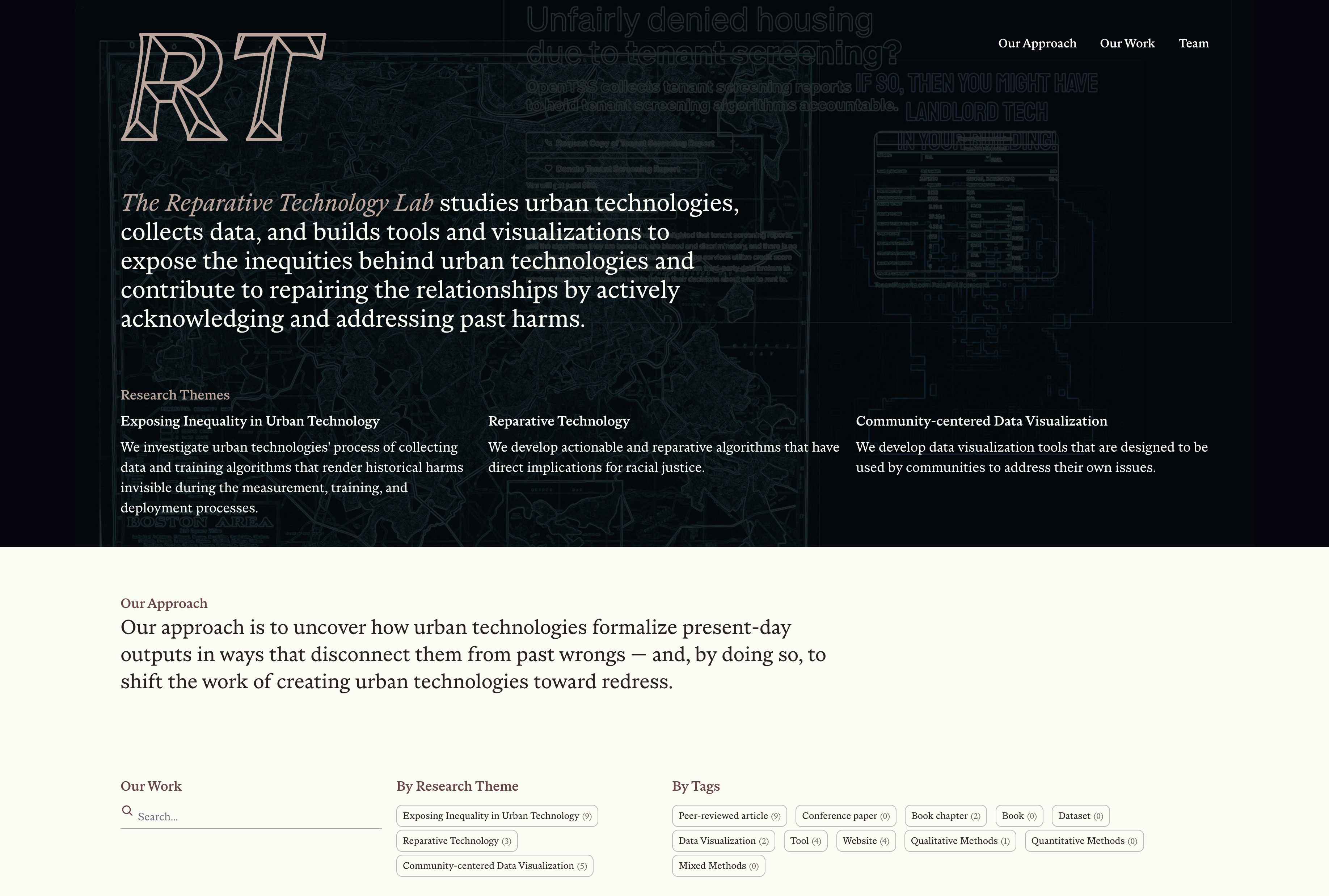
Wonyoung So and I taught together last semester so I got to see the urban technology program vicariously through his calm and curious eyes. One day he was lecturing on putting values like sustainability and justice into action—what do you concretely do if those are things you care about?—and the next he was helping students hack an API, refine a UX mockup, or clarify an argument. Fun stuff. He recently launched the Reparative Technology Lab to work on inequities embedded in urban technologies, so now we can add determined and ambitious to the list of adjectives that describe Wonyoung.
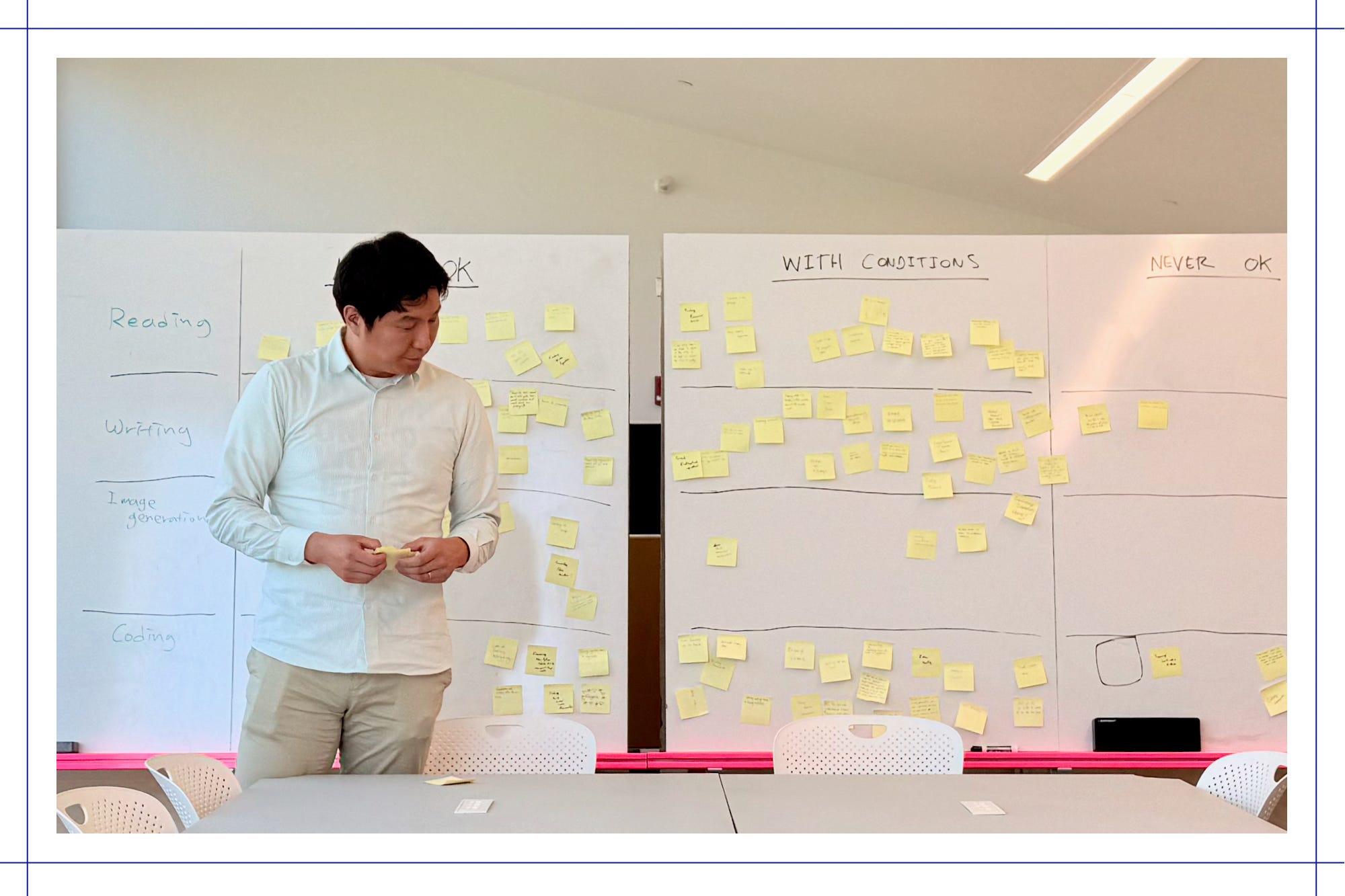
Bryan: What is reparative technology?
Wonyoung: I like to decompose it, because I want to be really practical about this work. To create reparative technologies, one approach is exposing the mechanisms of technology that create or contribute to the inequalities that we have.
A second approach is to change the outcomes of a given algorithm. The problem is actually the question of what a fair algorithm or algorithmic fairness is. I realized it’s almost impossible to create fair algorithms without addressing the underlying relationship of historical inequalities. The starting point is that we know there’s an inequality that technology actually contributes to. Then we can shift our orientation from creating fair algorithms to creating reparative algorithms, or affirmative algorithms, as some people say. In one of my papers, I identified that treating people explicitly differently is almost the only way to fix the underlying inequality—not just “de-biasing” the algorithms and technologies but by changing outcomes. An example would be giving more down payment assistance to people who are historically discriminated against.
Bryan: Is it fair to say that you can’t just eliminate bias, you have to actively create reparative value?
Wonyoung: I tend to highlight this intentionality a lot in my work. In discourse around fairness, one of the underlying assumptions is that technology is neutral, and by trying to be more neutral and balanced, we can create fair technologies. In my work, I try to counter that by highlighting the intention at the front, and being more proactive.
Bryan: What’s an example of reparative technology?
Wonyoung: One good example is that the state of Washington recently created the Washington Covenant Homeownership Program. They did a study to figure out the historical discrimination—in this case, via restrictive covenants—and then used this argument to legislate a statewide reparative lending program that distributes down payment assistance based on that research.
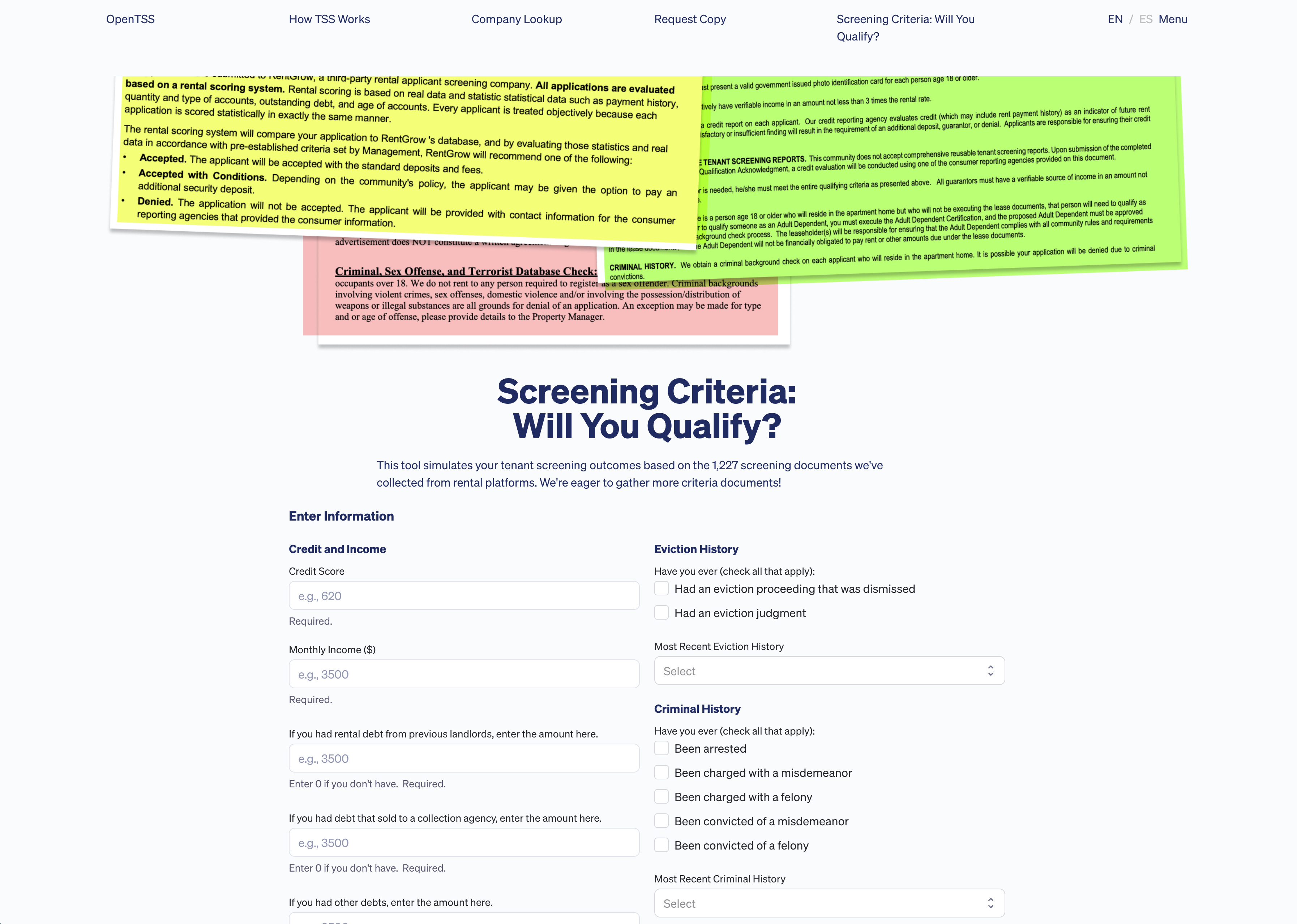
Bryan: Does reparative technology require a new attitude toward risks?
Wonyoung: I wrote about this in my work on risk-based pricing. One of the fundamental irritations for me, in terms of risk, is that by doing risk assessment work, the consequence is that people who should be most protected end up paying more.
The mortgage lending context is a prime example. Because of the racial wealth gap, people who end up having less down payment due to historical injustices end up paying more in mortgage interest because of this risk assessment. It comes from the different value proposition of those who have resources and opportunities and want to protect their interests. From the lender’s perspective, this assessment makes financial sense. But on the other side, people who are actually assessed end up paying double, which doesn’t make sense for them. They’ve been discriminated against by the system, and then to engage with these contemporary technologies or algorithms, they end up paying more for the risk they have been left with from the past. Technology works beautifully, skeptically speaking, at detaching all of the context from a decision (such as historical inequities) and applying all of the risk onto the individual.
Bryan: What is your theory of change for urban planning? How does it create change?
Wonyoung: Planning is fundamentally thinking about institutional change, coming from institutions and public support. That involves a lot of democracy. When people talk about democracy, their definitions are really different, and my theory of change might differ from others. I almost think democracy is a synonym for equity.
When you think about democracy in planning, especially around taxation, people who have more physical resources such as owning homes, usually have more of a say, according to Fischel. That dynamic is happening at the local and municipal level, and democracy is actually shaped by those who have more resources and opportunities. So my theory of change is that, in order to have institutional-level changes, we ironically need to think about the people who are most marginalized, in order to have a democracy that makes change possible.
It translates into the technology context as well. When you think about democratic AI or democratic technology, what we need to focus on is those who are marginalized by those technologies.
Bryan: That makes me think of the accessibility advocacy from decades ago — if we make the city work for people who are in a wheelchair, it’s going to work great for everybody else too.
Wonyoung: Exactly.
Bryan: What is your favorite city and why?
Wonyoung: I really miss Seoul, which has a really reliable transit ecosystem. There are a lot of bad things about Seoul, but I really like the good things: the river, the mix of nature, the two big mountains in the city.
These weeks: It didn’t fit above but this is a cool project on the cartographers of North Korea. UT++ reached a new milestone. Faculty committees, studio discussions, and rapidly planning some cool stuff for this summer. More soon, as we shift posture from giraffe to anteater.